
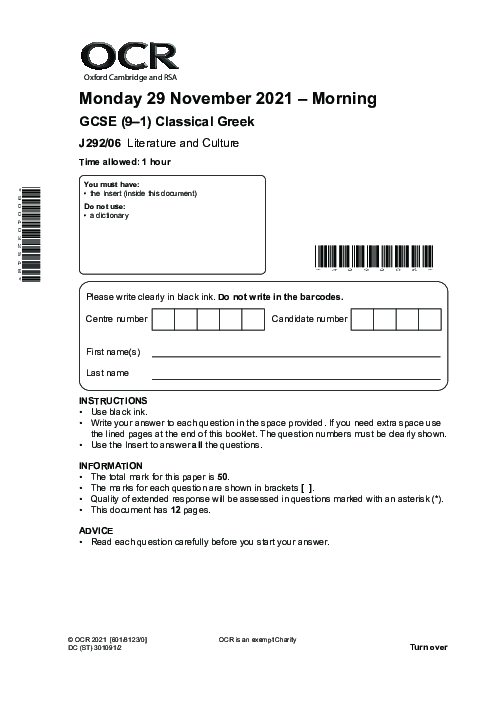
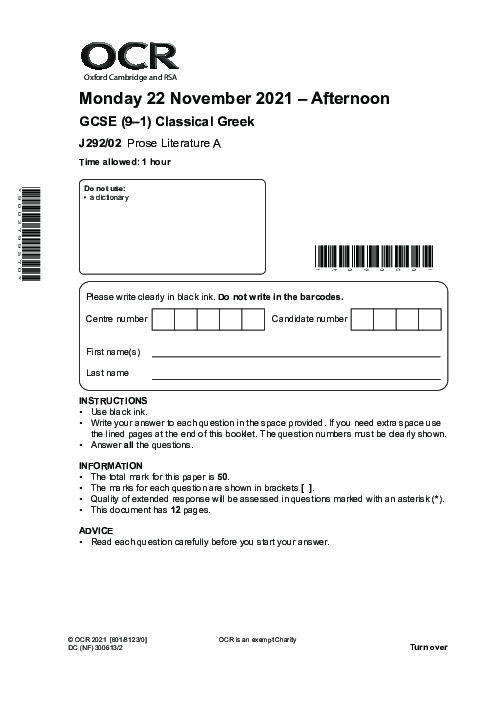
Classical Greek J292,05 November 2021
OCR
GCSE
Classical Greek (J292)
Nov
2021
1. Electra’s Initial Desperation and Distrust: Her fear of strangers, her disbelief in Orestes’ return, and her bitterness toward her situation.
2. Recognition and Reunion with Orestes: The shift in Electra’s attitude as she realizes who Orestes is, and how Euripides uses dramatic irony to heighten the moment.
3. Aegisthus’ Cruelty and Electra’s Hatred: His desire to weaken Electra, his drunken mockery at Agamemnon’s tomb, and her outrage at his disrespect.
4. Electra’s Suffering and Social Decline: Her jealousy of Clytemnestra’s luxury, her resentment toward the palace servants, and her forced labor in contrast to her royal past.
5. Euripides’ Emotional Language: His use of vivid imagery to highlight Electra’s grief, her deep longing for revenge, and her passionate calls for justice.
6. The Justification of Electra’s Feelings: The audience’s perspective on whether her hatred, suffering, and desire for vengeance are justified, based on her tragic circumstances.

پیش نمایش صفحه اول فایل
تعداد صفحات فایل : 12
باز نشر محتواها در فضای مجازی، ممنوع است.
 Laura Bellini



پرسش و پاسخ های مشابه
سوال کنید یا به سوالات دیگران پاسخ دهید ...